
 Lucy

What’s in this article
Most people spend more time planning their Italy trip than they spend in Italy. They open seventeen tabs, read conflicting recommendations, plan an itinerary that tries to include Rome, Florence, the Amalfi Coast, and the Dolomites within ten days, and then spend the whole flight wondering if they got it wrong.
I’m Lucy. I’m Italian, I grew up near Naples, and have been living in Verona for many years now (ask me where to find the best Amarone ) and I’ve watched a lot of people plan Italy trips from the outside, and I’ve helped a lot of people figure out what they truly want once they stop trying to do everything. This post is what I wish someone had told me to pass on sooner.
Quick Advice for Italy Planning:
- Pick a Region: Don’t mix the North and South in one short trip.
- Transport: Use high-speed rail between cities; rent cars for rural areas (Tuscany/Umbria).
- Timing: Avoid ZTL zones in cities and be wary of the August “Ferragosto” closures.
- The Golden Rule: Italy rewards depth over distance.
The real problem with most Italy itineraries
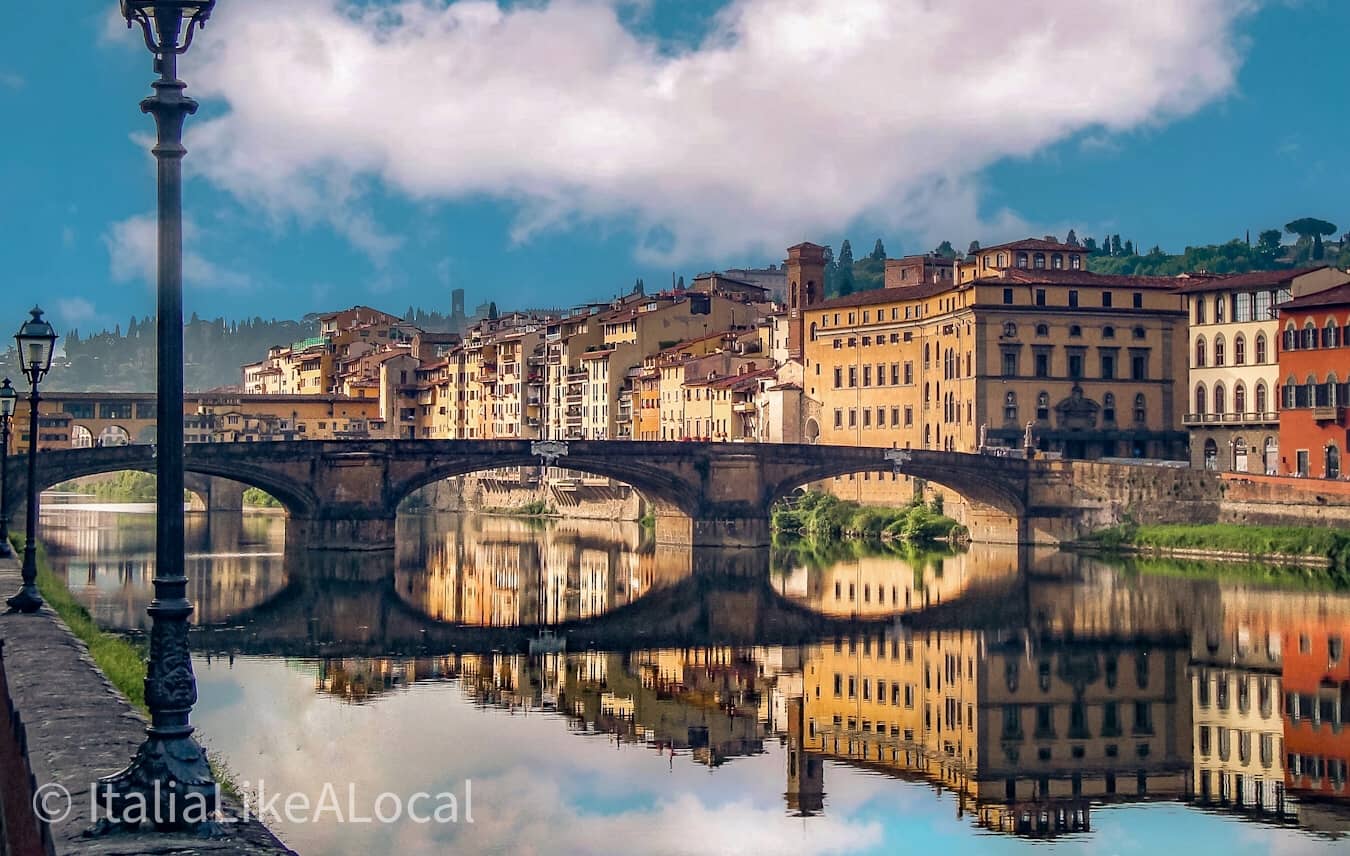
The problem isn’t that people choose the wrong cities. It’s that they plan Italy like a highlight reel instead of a trip. Rome, Florence, Venice in seven days. A night here, two nights there. Just enough time to feel the pressure of each place without actually settling into any of them.
Italy doesn’t work like that. It rewards slowness. A single neighborhood in Naples has more layers than most countries. You can spend four days in Bologna and still not run out of things to understand about how Italians actually live. The tourists who have the best time are almost always the ones who picked fewer places and stayed longer.
That’s the first thing to accept before you start building your itinerary.
Choosing Your Region: Northern vs. Southern Italy
This sounds obvious but it’s something a lot of first-time visitors miss. Northern Italy and southern Italy are genuinely different countries in a lot of ways. The food is different. The pace is different. The relationship to tourists is different. The infrastructure may be a bit different
If your trip covers Milan, Lake Como or Lake Garda, and then Tuscany only to jump on over to Sicily – you’re only getting pieces of different Italys all cobbled together with a lot of hassle getting from one place to another. That’s not necessarily a bad way to go but it is worth knowing.
A better strategy is to pick a single region and really dig in. The centre of Italy – Lazio, Umbria and Tuscany, is all pretty manageable and somehow clicks into place. Southern Italy – Campania down to Calabria and over to Sicily – that is a completely different and pretty mind-blowing trip. Then there is the north – Venice, the lakes and intoPiedmont – which is another whole world. You don’t have to do all of them at once.

Italy Transport Logistics: Trains, Driving, and ZTL Zones
Trains. Italy’s high-speed rail is genuinely good between major cities. Rome to Florence takes about 1.5 hours. Florence to Venice is around 2 hours. Book these in advance on Trenitalia or Italo, especially in summer, because prices go up as the date approaches and trains fill.
Regional trains are slower and cheaper. Fine for short hops between smaller towns. Not always punctual, but Italian delays are usually measured in minutes, not hours.
Driving. For southern Italy, Umbria, rural Tuscany, and anywhere the trains don’t reach well, a car is often the better option. Driving in Italian cities is a different matter. Most historic centers are ZTL zones (zona a traffico limitato), which means cameras will fine you automatically if you drive in without a permit. Don’t try to drive into central Florence, Rome, Siena, or most old town centers.
August. If you’re going in August, especially the week of Ferragosto around the 15th, know that Italy is on vacation. Locals leave the cities and head to the coast. Some restaurants do close down, and so do some of the smaller attractions. But beach towns are jam-packed with visitors – that’s not all bad, but it’s certainly a crowded and pricey time to visit , and it tends to suit some holiday styles a lot better than others.

What are the key elements of a good Italy travel itinerary?
A good Italy itinerary needs to factor in travel time between places, not just the wow-factor sights at each stop. It also makes sure to build in at least one free and easy afternoon with nothing on the schedule – that’s usually when the unexpected and often the best experiences turn up.
It’s also not a good idea to try cram too many big destinations into ten days unless they’re right next door to each other. It also needs to take into account who you are as a traveller. Some people want to eat their way through a region and don’t care about museums. Others want to spend three hours in the Uffizi and eat wherever. Some people are traveling with kids and need a different kind of pace. Some people want the famous things and some people specifically want to avoid them.
A generic itinerary doesn’t account for any of that. A plan built around your actual preferences does.
How I can help you with your Italy trip planning?
If you’re still in the early stages, I put together a free Italy Trip Planning Framework: five rules, four routing patterns, a city-to-night calculator, and a pre-booking checklist. It’s a condensed version of the planning logic I use with everyone, and it’s a good place to start if you haven’t committed to anything yet. Download it here, no cost.
That framework is an extract. The full version is the Italy Travel Designer, a complete 16-section planner that goes much deeper: a travel style quiz that shapes every routing decision, templates for 7, 10, and 14-night trips, accommodation guidance by city and travel type, and a hidden gems layer covering markets, viewpoints, artisan shops, and scenic drives most people never find.
It’s included when you subscribe to Speak Italian Like a Local, my Substack on Italian language and culture. Paid subscribers get it in their welcome sequence, along with weekly lessons on pronunciation, idiomatic expressions, and the kind of contextual knowledge that makes Italy make sense. The paid tier is €12 a month or €97 a year.
Italy itinerary review
If you already have a draft itinerary and want a real person to check whether it holds together, that’s a different kind of help. Actually, i offer an itinerary review where i go through your plan completely, routing logic, night counts, transport connections, accommodation placement, what needs booking months out, and send back a written assessment within 48 hours. No calls.
One document you can act on immediately. That’s €87.
For restaurant and accommodation recommendations built in alongside the review, the Full Local Intelligence package covers both for €167.
Start with the free framework if you’re at the beginning. Move to the full planner if you want the complete method. Come back for the review once you have a draft worth stress-testing.
Italy trip planning: your questions answered by a local
For a first-time trip that feels like a vacation rather than a marathon, 10 to 14 days is the sweet spot.
However, the number of days matters less than your city-to-night ratio. If you try to see four major cities in 10 days, you aren’t visiting Italy; you’re visiting Italian train stations.
To find your perfect duration, apply these three “local logic” rules:
1. The 3-night minimum rule
Never stay fewer than three nights in major hubs like Rome or Florence.
1 night: You only see the hotel and one tourist trap.
2 nights: You get one full day of sightseeing (exhausting).
3 nights: You finally have time to find “your” local coffee bar and wander without a map.
2. Factor in the “half-day tax”
Every time you switch cities, you lose roughly 4–6 hours to packing, checking out, train travel, and finding your next accommodation. On a 10-day trip with four stops, you effectively lose two full days just to logistics.
3. The regional limit
7 Days: Stick to one region (e.g., just Tuscany or just Sicily).
10 Days: You can comfortably see two regions if they are connected by high-speed rail (e.g. Venice (Veneto) and Lazio (Rome) or Tuscany (Florence).
14+ Days: This is the only timeframe where “The Big Three” (Rome, Florence, Venice) plus a coastal or rural break actually feels enjoyable.
Take the train for city-hopping; rent a car for the countryside. Mixing the two is almost always the smartest strategy.
Italy is a country of two halves when it comes to logistics. One half is exceptionally well-connected by high-speed rail, and the other requires four wheels and a bit of patience.
If your itinerary looks like Rome → Florence → Venice → Milan, do not rent a car.
High-speed trains (Frecciarossa or Italo) travel at 300 km/h. Rome to Florence takes just 1.5 hours, a drive that can take 3.5 hours once you factor in traffic.
Stations are in the heart of the city. You step off the train and you’re a 10-minute walk from the Duomo or the Colosseum.
No parking fees, no confusing signs, and absolutely zero ZTL (Limited Traffic Zone) fines.
If you are heading to Tuscany’s Val d’Orcia, Umbria, the Dolomites, or Puglia, you need a car.
The “real” Italy happens between the train stops. A car lets you pull over for a roadside porchetta sandwich or visit a winery that isn’t near a station.
If you’re traveling with kids (and the inevitable mountain of gear that comes with them), a car acts as a mobile locker.
While trains exist in the South, they are often slower regional lines. Driving is the most efficient way to navigate the coastline and hilltop villages.
Before you rent that car, keep two things in mind:
ZTL Zones: Most historic centers are forbidden to non-resident drivers. If you drive past a white sign with a red circle, a camera will snap your plate, and a €100+ fine will find you six months later.
Parking: In places like the Amalfi Coast or central Florence, parking is either non-existent or costs as much as a nice dinner.
I prefer to drive for the freedom of it, but I never bring a car into a city. My favorite trick? Take the train between major hubs, then rent a car only for the 3–4 days you plan to spend in the countryside. It’s the best of both worlds.
The most common mistake is treating Italy like a “highlight Reel” instead of a destination. Most travelers try to see too many cities in too few days, forgetting to account for the “logistics tax.”
When you try to fit Rome, Florence, Venice, and the Amalfi Coast into a 10-day trip, you aren’t actually seeing Italy, you’re mostly seeing the inside of train stations and hotel lobbies.
Every time you change cities, you lose half a day. Packing, checking out, getting to the station, the train ride, finding your new hotel, and checking back in takes roughly 5 – 6 hours. If you move every two days, you are spending 25% of your precious vacation time just “moving house.”
Italy rewards slowness. The “magic” of Italy, the long lunch that turns into an afternoon, the accidental discovery of a hidden piazza, the conversation with a local artisan, cannot happen if you have a train to catch every 48 hours.
Trying to see Milan and Sicily in one week is like trying to see New York and Florida in the same timeframe. They are culturally and geographically distinct. A better approach is to pick one half of the country or even one single region and go deep.
I see it all the time: people arrive in Verona or Florence already exhausted because they’ve been ‘on the clock’ since they landed. The best Italy trip isn’t the one where you saw the most; it’s the one where you actually felt like you lived there for a moment.
Ciao and safe travels!
